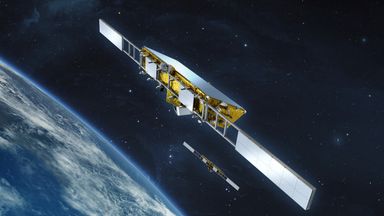
Harmony, ESA's tenth Earth Explorer mission, is set for launch in 2029. This unique mission will advance climate research and risk management by capturing motion at or near Earth's surface down to the centimeter: from waves and clouds to volcanoes and glaciers
To do this, the mission will fly two identical satellites with different viewpoints, in formation with a third satellite, Sentinel-1, which is already waiting in orbit. The schedule leaves no room for delay.
Add to that the technical challenges: synchronizing the radar systems, folding the 13-meter antennas for launch, squeezing both satellites into a single launcher fairing with strict volume and mass constraints, and ensuring they separate cleanly in orbit.
For all this to come together on time, every TEC engineer on the team must understand how their choices affect other parts of the mission and collaborate to craft solutions that work at every level.
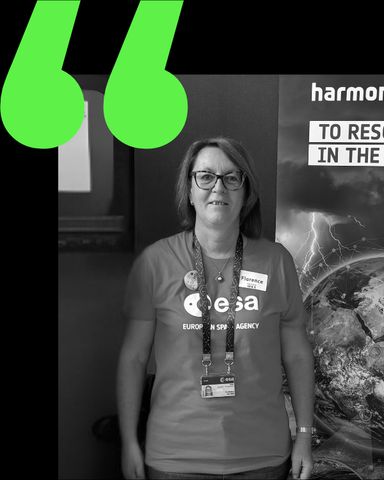
When Florence Hélière, Project Manager for Harmony, heard about Project Mindset, she immediately jumped on it. After the workshop, Florence and her team began experimenting with new ways of working.
Here's what they did differently:
Created a shared context to ensure everyone was working from the same picture.
Improved their ability to make decisions despite not having all the answers.
Made sure everyone felt safe speaking up and raising concerns.
Together, these changes are helping the team tackle the complexities of the mission at the pace required to make their space rendezvous.